Conditional Statements
Choosing which branch runs
Breaking Changes
if and else become keywords.
{ and } are now reserved for blocks.
Only One Branch Runs
if (temperature > 90) {
    print("Too hot");
} else {
    print("Fine");
}
The condition must be a boolean.
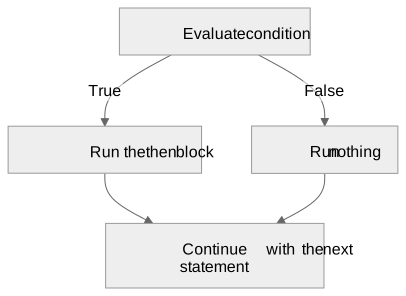
If, No Else
If, With Else
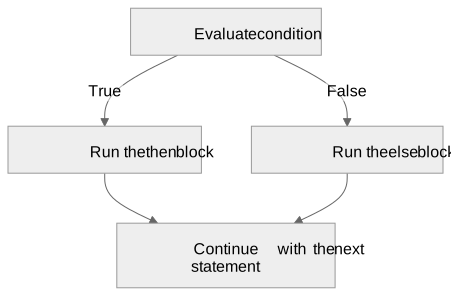
Exactly one branch runs, either way.
The Unselected Branch Is Never Evaluated
if (false) {
    stuck = exit(9) + number(input());
} else {
    print("only this branch runs");
}
Not skipped output. Skipped evaluation.
Every Branch Is a Block
if_statement ::= "if" "(" expression ")" block [ "else" block ]
block ::= "{" [ statement_list ] { ";" } "}"
A bare statement is never a valid branch.
Why Require Braces Everywhere
if (a) if (b) x=1; else y=2;Which if does the else belong to?
No “else if” Shortcut
if (grade >= 90) {
    letter = "A";
} else {
    if (grade >= 80) {
        letter = "B";
    } else {
        letter = "C or lower";
    };
};
Parsing a Block
def parse_block(tokens):
    tokens = require(tokens, "{", "Expected '{' to start a block")
    while tokens[0]["tag"] == ";":
        tokens = tokens[1:]
    if tokens[0]["tag"] == "}":
        return {"tag": "statement_list", "statements": []}, tokens[1:]
    statements, tokens = parse_statement_list(tokens)
    tokens = require(tokens, "}", "Expected '}' to close a block")
    return statements, tokens
Empty Blocks Are Legal
if (found) { }{}, { ; }, and { ;;; }
are empty blocks.
A Second Caller for statement_list
if tokens[0]["tag"] in (None, "}"):
    break
A trailing semicolon before } is now allowed
too.
Semicolons Around a Conditional
if (true) { x=1 };
y=2;
A semicolon after }, none before
else.
Parsing an If Statement
def parse_if_statement(tokens):
    tokens = require(tokens, "if", "Expected 'if'")
    tokens = require(tokens, "(", "Expected '(' after 'if'")
    condition, tokens = parse_expression(tokens)
    tokens = require(tokens, ")", "Expected ')' after if condition")
    then_block, tokens = parse_block(tokens)
    else_block = None
    if tokens[0]["tag"] == "else":
        else_block, tokens = parse_block(tokens[1:])
    return {"tag": "if", "condition": condition, "then": then_block,
            "else": else_block}, tokens
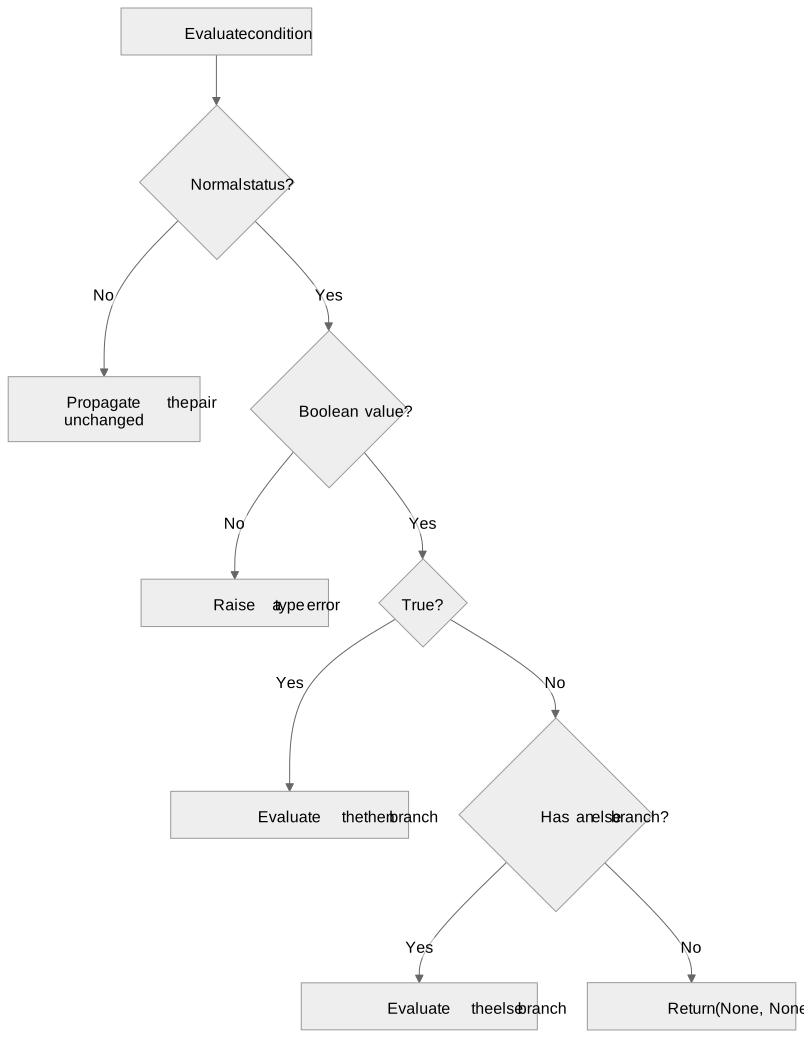
Evaluating a Conditional
if ast["tag"] == "if":
    condition, status = evaluate(ast["condition"], environment)
    if status is not None:
        return condition, status
    if type(condition) is not bool:
        raise TypeError("if condition must be a boolean expression")
    if condition:
        return evaluate(ast["then"], environment)
    if ast["else"] is not None:
        return evaluate(ast["else"], environment)
    return None, None
The Full Decision
Status Still Escapes Nested Blocks
x = 1;
if (true) {
    if (true) {
        exit(7);
    };
};
x = 2;
Result: (7, "exit"). x stays
1.
Testing the Contract
Single- and two-branch conditionals, nested conditionals, multi-statement blocks.
Unselected branch never touches input, exit, or assert.
Status escapes nested blocks and stops later statements.
Parser rejects unbraced bodies; accepts braced single-statement and nested blocks.
Questions for Thought
Why must the unselected branch be skipped entirely, not evaluated and discarded?
What would break if if consumed a status from its own
selected branch?
What would adding an “else if” shortcut change about how
else attaches?
If blocks later introduced their own scope, what would have to change here?