Returning Status
Values and control flow
Breaking Changes
value, status = evaluate(ast, environment)Every evaluator result is now a pair.
exit and assert become keywords.
Value Is Not Status
| Evaluation | Value | Status |
|---|---|---|
2 + 3 |
5 |
None |
2 > 3 |
False |
None |
print(5) |
None |
None |
exit(7) |
7 |
"exit" |
False is a normal result.
The Caller Rule
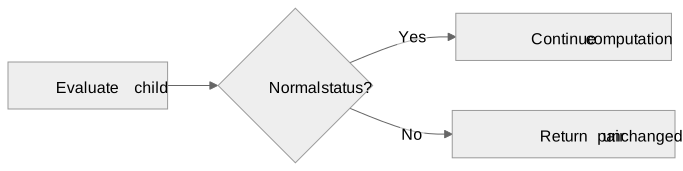
Check status before using the value.
Two Operands, Two Checks
left, status = evaluate(ast["left"], environment)
if status is not None:
    return left, status
right, status = evaluate(ast["right"], environment)
if status is not None:
    return right, status
return left + right, None
Requesting Exit
| Source | Returned pair |
|---|---|
exit() |
(0, "exit") |
exit(2 + 3) |
(5, "exit") |
exit(exit(7)) |
(7, "exit") |
Parentheses required. Integer argument optional.
Where Does Execution Stop?
x = 3;
x = exit(7) + number(input());
print(x);
No input. No addition. No reassignment. No print.
Exit Returns Outward

Every arrow carries (7, "exit").
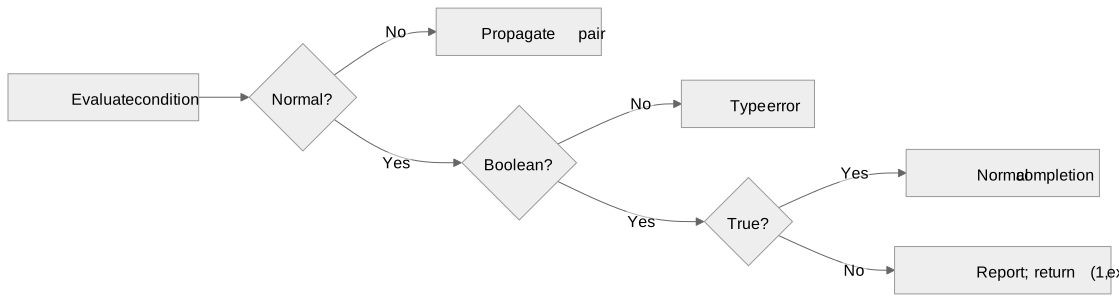
Assertions State Expectations
answer = 41;
assert answer == 42, "Expected 42";
print("This must not run");
Assertion failed: Expected 42Report here. Return (1, "exit").
Assertion Workflow
The Runner Handles Exit
value, status = evaluate(ast, {})
if status == "exit":
    sys.exit(value)
if status is not None:
    raise ValueError(f"Unhandled status: {status}")
Evaluation is testable without terminating the test process.
Skipped Nodes Produce No Status
| Expression | Result |
|---|---|
false and exit(9) |
(False, None) |
true or exit(9) |
(True, None) |
true and exit(9) |
(9, "exit") |
type(exit(9)) |
(9, "exit") |
Stopping Is Not Undoing
input() + exit(7)     input is consumed
exit(7) + input()     input is skipped
Both return (7, "exit").
Test the Pair and the Effects
result, env = evaluate_source("x=3;x=exit(7);x=99")
assert result == (7, "exit")
assert env["x"] == 3
Exit exactly once. Later work never runs.
Questions for Thought
Why check status before storing an assignment?
Which structure should handle break?
What would recovery from assertion failure require?