ORM with Constraints
Pets, owners, and rules, written as Peewee models
Same Routes, Three Layers
| Layer | Job |
|---|---|
| Browser | Fast feedback |
| Web application | Reliable movement of data |
| Database layer | Data follows the rules: Python checks, then the table |
Handle the error at every layer we can.
Start with a Current Database
python3 upgrade_database.py| The file | Result |
|---|---|
| Missing | Empty current tables |
| Has the rules the check looks for | No change |
| Older layout | New tables, data reloaded, original kept |
Running the Example
python3 -m pip install -r requirements.txt
python3 upgrade_database.py
flask run
python3 -m unittest -v
http://127.0.0.1:5000/list
Create an owner first.
Rules in the Model
class Pet(BaseModel):
    name = TextField(null=False, constraints=[
        Check("length(trim(name)) > 0")])
    type = TextField(null=False, constraints=[
        Check("length(trim(type)) > 0")])
    age = IntegerField(default=0, constraints=[
        Check("age >= 0")])
    owner = ForeignKeyField(Owner, backref="pets",
        null=False, on_delete="RESTRICT")
The Table Peewee Writes
CREATE TABLE "pet" (
  "id" INTEGER NOT NULL PRIMARY KEY,
  "name" TEXT NOT NULL CHECK (length(trim(name)) > 0),
  "type" TEXT NOT NULL CHECK (length(trim(type)) > 0),
  "age" INTEGER NOT NULL CHECK (age >= 0),
  "owner_id" INTEGER NOT NULL,
  FOREIGN KEY ("owner_id")
    REFERENCES "owner" ("id") ON DELETE RESTRICT
)
Read it with sqlite3 pets.db .schema.
What the Upgrade Reports
loaded 1 owners and 2 pets
2 pets had no owner: now 'Unassigned'
not carried over: food
skipped pet 4: CHECK constraint failed: age >= 0
original file kept as pets.db.before-upgrade
Rows that break a rule are listed, not hidden.
A Foreign Key Is a Field
| Argument | Effect |
|---|---|
Owner |
Which table |
null=False |
Every pet has an owner |
on_delete="RESTRICT" |
Owner with pets cannot go |
backref="pets" |
owner.pets |
pet.owner_id is an integer. pet.owner is an
Owner.
Foreign Keys Are Off Until Asked
db.init(database_file,
        pragmas={"foreign_keys": 1})
...
fk = db.execute_sql(
    "PRAGMA foreign_keys").fetchone()[0]
assert fk == 1
The setting belongs to the connection.
One Bad Request, Four Checks
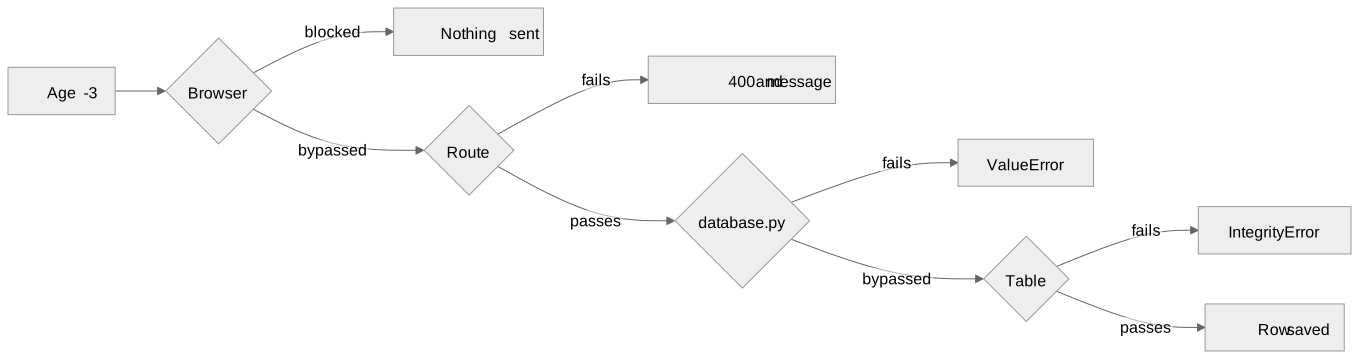
Who Catches What
| Request | Browser | Route | database.py |
Table |
|---|---|---|---|---|
| Blank name | required |
yes | ValueError |
CHECK |
Age -1 |
min="0" |
yes | ValueError |
CHECK |
Age abc |
number |
yes | ValueError |
not stopped |
| No owner | required |
yes | ValueError |
NOT NULL |
Owner 999999 |
dropdown | passes it on | passes it on | FOREIGN KEY |
| Delete owner with pets | none | reports | passes it on | RESTRICT |
A Rule Changed
age = int(value)
if age < 0:
    raise ValueError("Age must be non-negative.")
return age
Blank age is still 0. Bad input is no longer turned into
0.
Errors Arrive as Peewee Exceptions
from peewee import IntegrityError, OperationalErrorexcept IntegrityError as e:
return error_page("Error: Cannot delete this "
"owner because they have pets.", 400)Routes now depend on Peewee. Is that acceptable?
Join, or Pay N+1
Pet.select(Pet, Owner).join(Owner) \
.order_by(Pet.name, Pet.id)| Three pets | Queries |
|---|---|
No join, pet.owner.name |
4 |
| With join | 1 |
Reassign, Then Delete
pet.owner = int(owner_id)
pet.save()| Step | Result |
|---|---|
| Delete Alex, pets remain | Rejected |
| Move one pet to Sam | Alex still has one |
| Move the other | Alex has none |
| Delete Alex | Succeeds |
Group Writes Around a Failure
with database.db.atomic():
    database.create_pet(first_pet)
    database.create_pet(pet_with_bad_owner)
Second insert fails: neither pet is stored.
Test Below the Layer Above
with self.assertRaises(IntegrityError):
    Pet.create(owner=owner_id, name="   ",
               type="dog", age=1)
Skip the helper. Does the table still refuse?
Exercise: When Is an Owner a Duplicate?
Same name, different cities?
Same name, same city?
Same name, no city?
Which layers should know?
Where the Rules Live
Browser: tell them now.
Route: explain the failure.
Database layer: never store a broken row.